
The Willowbrook Hepatitis Experiments: A Dark Chapter That Changed Medical Ethics

Imagine sending your child to a school hoping they’ll receive care and education—only to learn they were deliberately infected with a disease. That’s what happened at Willowbrook State School in New York, where hundreds of children with developmental disabilities were used in hepatitis experiments during the mid-20th century.
What Was Willowbrook?
Willowbrook was a state-run institution on Staten Island, meant to care for children with intellectual disabilities. But by the 1950s, it was overcrowded, understaffed, and plagued by poor sanitation. Hepatitis outbreaks were common, and researchers saw an opportunity to study the disease.
What Were the Experiments?
Between 1956 and 1971, researchers—led by Dr. Saul Krugman—deliberately infected children with hepatitis to study how the virus spread and how it might be prevented. Some children were fed food mixed with infected feces or injected with the virus. The goal was to develop a vaccine, and Krugman did make scientific advances. But the cost was enormous.
Parents were often told that participation in the study was the only way to secure a spot for their child in the overcrowded school. This created a situation where consent wasn’t truly voluntary—it was coerced.
Why Was This Wrong?
Vulnerable children were used as test subjects.
Informed consent was not properly obtained.
Coercion played a role in enrollment.
Basic human dignity was ignored.
These children couldn’t advocate for themselves, and their families were often desperate for help. The experiments violated ethical principles that protect human subjects in research.
What Happened After?
Public outrage grew as the truth came to light. Willowbrook became a symbol of neglect and abuse. The school was eventually closed in 1987, and the scandal helped spark major reforms in how medical research is conducted.
Today, we have Institutional Review Boards (IRBs) that oversee research involving humans. We also have strict rules about informed consent, especially when working with vulnerable populations.
Why It Matters
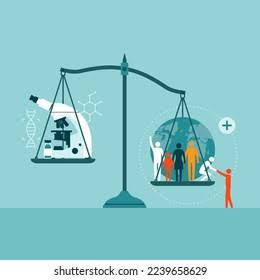
The Willowbrook case reminds us that scientific progress must never come at the cost of human rights. It’s a powerful example of how ethics must guide medicine and research.
The children of Willowbrook didn’t have a voice—but their story helped ensure future generations would.
This was such a difficult read, but so important. You captured the horror of Willowbrook without sensationalizing it, and that’s rare. The part about “consent wasn’t truly voluntary, it was coerced” really hit me. It’s terrifying how easily ethics can be bent when people feel desperate or powerless. Thank you for writing this and for reminding us that “progress” without humanity isn’t progress at all.